AI + technology consulting · New Zealand
Turn ambitious ideas into working systems.
Practical AI, technology leadership, and product engineering for organisations ready to move forward.
What are you trying to move forward?
Pick the one that sounds most like you. Each path shows the services that usually help and what you get at the end.
Technology is rarely just a technology problem.
Good systems come from understanding the business they serve, the people who will build and use them, and the risks that come with them. Then you need a realistic path from a promising prototype to something people depend on.
The business
What has to be true commercially
The people
Who builds it, uses it, and owns it
The process
How the work actually happens today
The architecture
What it runs on and how it grows
The risks
Security, safety, cost, and failure
The path to production
From prototype to something dependable
My experience covers applied AI, software engineering, data, systems architecture, product engineering, hardware and IoT, automation, and technology leadership. That range is what lets me see the whole problem, not just the part that fits a speciality.
From first question to a system that scales.
Most work moves through the same stages. You can start at any of them, and each one links to the services that help.
Understand
The business, the people, the current systems, and what's really in the way.
Define
Choose the right problem, set the scope, and agree what success looks like.
Design
Architecture, data, and delivery plans that survive contact with reality.
Build
Working software early, riskiest parts first, tested against real use.
Improve
Measure, harden, and refine until it's dependable and people want to use it.
Scale
Grow the system, the team, and the governance around it, without losing control.
Work that had to hold up in the real world.
All selected workAgriculture and connected systems
A connected sensing platform from device to dashboard
Designing the end-to-end architecture for sensors, edge devices, and cloud software that had to survive real conditions.
Read the case studyProfessional services
An AI-assisted workflow for document-heavy operations
Using LLMs, with people still in charge, to take the repetitive reading and drafting out of a skilled team's day.
Read the case studyCustomer operations
Voice AI intake, from prototype to pilot
Taking a voice-agent idea from a quick demo to a pilot that handled real calls safely.
Read the case studyTechnology product company
Technical leadership for a growing product team
Bringing direction, structure, and calm to an engineering team that had outgrown its early habits.
Read the case study
Why work with me
Most problems need someone who can see the whole picture and still get into the detail.
Senior enough to lead.
I've led teams and complex programmes, and I can take ownership of the hard parts.
Technical enough to build.
I still write code and design systems, so advice is grounded in how things actually get made.
Commercial enough to connect it to outcomes.
Every technical decision is tied back to cost, risk, and what the business needs.
Practical enough not to over-engineer.
The simplest thing that works, built well, with room to grow.
Comfortable with ambiguity.
Unclear starting points are normal. Turning them into a plan is the job.
Independent or embedded.
I can deliver on my own or work inside your team, whichever serves the work.
Clear about complicated things.
I explain technology so leaders can make good decisions, without dumbing it down.
Three ways to work together.
Each engagement is scoped to the problem. Pricing depends on scope, so we start with a conversation.
Focused assessment
- Who it's for
- Teams that need clarity before committing: an opportunity, a system, or a decision.
- What's included
- Interviews with the people involved
- Review of systems, data, and constraints
- Hands-on testing where it helps
- Typical outputs
- Written findings
- Recommended approach and options
- Next steps with investment ranges
- How it begins
- A short call to agree the question, then a fixed scope and timeline.
Defined project or build
- Who it's for
- Organisations that know what they need and want it designed and built properly.
- What's included
- Architecture and delivery plan
- Hands-on build, alone or with your team
- Regular demos and decisions
- Typical outputs
- Working prototype, product, or system
- Documentation and handover
- Plan for the next stage
- How it begins
- A scoping session to define success, then the riskiest part of the work first.
Ongoing technical partnership
- Who it's for
- Organisations that need senior technical leadership over months, not weeks.
- What's included
- Fractional CTO or technical lead time
- Team mentoring and decision support
- Board and stakeholder communication
- Typical outputs
- Technical direction everyone understands
- Stronger, more independent team
- Regular progress reviews
- How it begins
- A few weeks of listening and review, then an agreed set of priorities.
Not sure which fits? That’s what the first call is for.
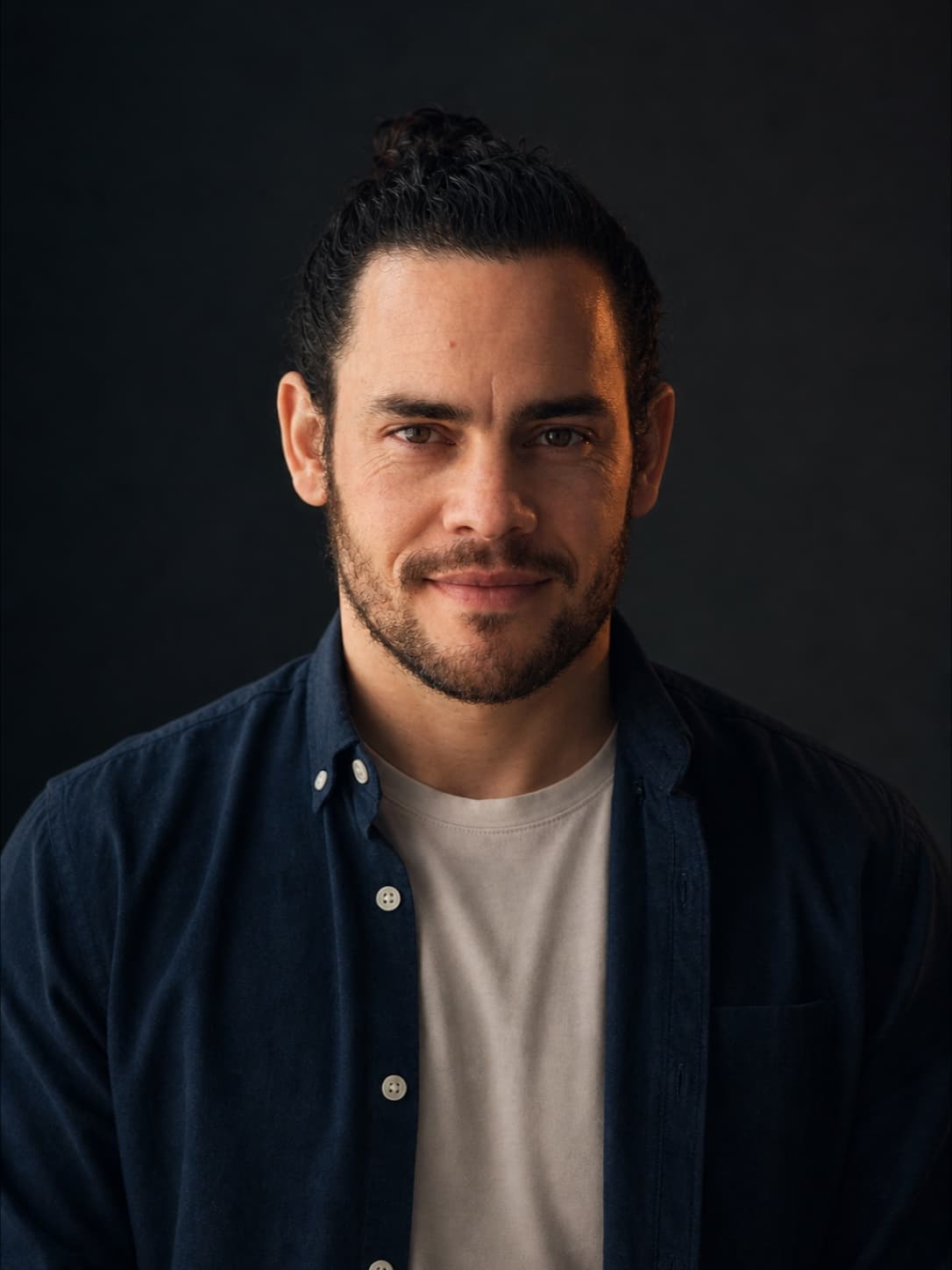
I’m Tim Mudford.
I've spent my career building technology that has to work in the real world: software products, data platforms, connected devices, and applied AI systems. I've worked as an engineer, an architect, and a technology leader, often at the same time.
Most recently I led technology at BioLumic, an agricultural biotechnology company, where the work spanned machine learning, scientific data, hardware, and the teams that brought them together.
I'm based in New Zealand and work with organisations here and around the world.
- Applied AI
- Software engineering
- Data
- Systems architecture
- Product engineering
- Hardware and IoT
- Automation
- Technology leadership
Questions people ask
Can you help if we do not know exactly what we need?
Yes. That's one of the most common starting points. We begin with the problem and the outcome you want, not a technology. The first piece of work is usually a short assessment that turns a vague ambition into a clear plan.
Do you only provide advice, or do you build things?
Both. I advise, design architecture, and write production code. Some engagements are purely strategic, others are hands-on builds, and many move from one to the other.
Can you work with our existing technical team?
Yes. I often work alongside in-house engineers, as a technical lead, a mentor, or a senior pair of hands on a hard problem. The aim is to leave your team stronger, not more dependent.
Can you help us understand where AI is actually useful?
Yes, and that includes telling you where it isn't. I look at your workflows, data, and risks, and recommend the uses that are likely to pay off. Sometimes the best answer is simpler software or a process change.
Can you review an existing system or architecture?
Yes. Architecture reviews cover design, code, infrastructure, security, and the team's ways of working. You get an honest assessment and a prioritised, practical improvement plan.
Can you provide ongoing technical leadership?
Yes. I offer fractional CTO and technical leadership on an ongoing basis, typically a set amount of time each week or month, shaped around what your organisation needs.
Can you work with New Zealand and international clients?
Yes. I'm based in New Zealand and work with clients locally and internationally. Most work happens remotely, with time-zone overlap agreed up front and travel when it's worth it.
What happens after the first call?
If there's a good fit, I'll send a short written summary of what I heard and a suggested next step, usually a focused assessment or a scoped piece of work. If I'm not the right person, I'll say so and point you somewhere useful where I can.
How long do engagements usually take?
Assessments usually take one to four weeks. Builds range from a few weeks for a prototype to several months for production systems. Leadership partnerships typically run for three months or more.
Can you help with AI governance, safety, and security?
Yes. I help organisations put practical AI policies in place, assess AI systems for failure modes, data exposure, and misuse, and build review processes that keep useful work moving.
Do you work with confidential or sensitive information?
Yes. I'm comfortable working under NDA and within your security requirements. We agree how data is accessed, stored, and handled before any work begins.
Have a technology or AI problem worth solving?
A 30-minute conversation. No pitch, just an honest view of whether and how I can help. Or talk to Maya, my AI guide, right now.